 Image 1 of 1
Additional Information:
Workshops for your Business / Group Rates are available, Please contact us to schedule
Small organizations face the same cyber threats as large corporations—ransomware, phishing, and increasingly sophisticated AI-powered attacks—but often without the staff or funding to fight back. In today’s landscape, deepfakes (synthetic video/audio impersonations) and AI vishing (AI-generated voice calls mimicking trusted people) are making scams more convincing and harder to spot, especially for teams with limited resources.
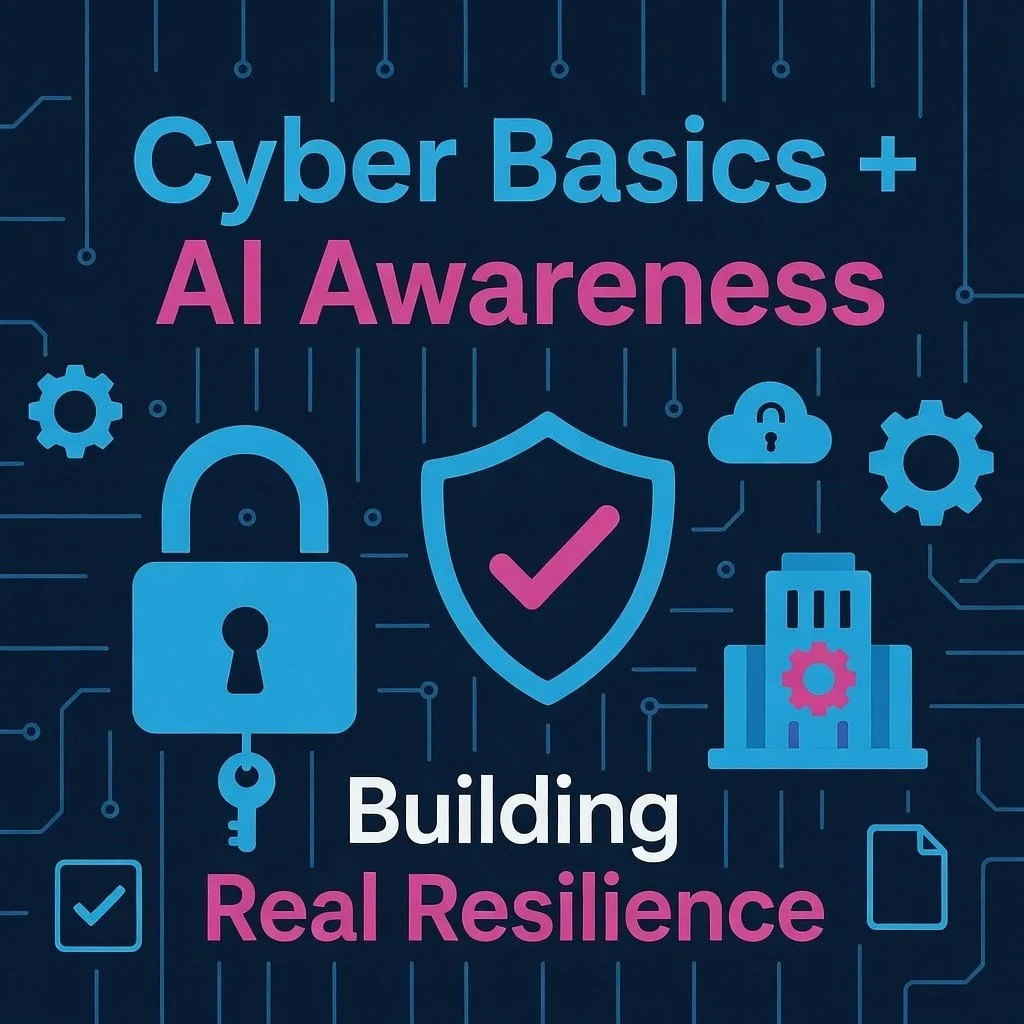
This practical 1-hour executive briefing gives you the top 5 must-have defenses that actually work in the real world, plus clear guidance on recognizing and avoiding AI-amplified risks like deepfakes and AI vishing. No technical jargon, no overwhelming checklists—just straightforward, low/no-cost steps you can implement quickly to protect your operations, data, and reputation.
What Leaders Will Walk Away With:
The current top threats small organizations face, including:
Ransomware disrupting services
Traditional phishing + AI-enhanced versions (more personalized, harder-to-spot emails)
Deepfakes (fake video/audio of executives, officials, or vendors used for fraud or misinformation)
AI vishing (voice-cloned phone calls impersonating CEOs, town managers, vendors, or family members to trick people into payments or data disclosure)
5 non-negotiable basics every small team should have:
Multi-Factor Authentication (MFA) enabled everywhere (free in most common tools) — critical defense against vishing follow-ups
Reliable 3-2-1 backups that are regularly tested
Basic phishing-resistant email habits and filters (helps catch AI-crafted messages)
Automatic patching and updates where possible
Simple endpoint protection (built-in tools + free enhancements)
How AI changes the threat landscape:
Faster, more convincing attacks (AI-generated phishing content, voice cloning for vishing, synthetic media for deepfakes)
Quick habits to defend against it: spot AI red flags (odd phrasing, unexpected urgency), verify caller identity before acting, use free basic deepfake detectors when suspicious media appears
How to Access Free and low-cost resources available to small organizations
A resilience checklist + sample policy language you can adapt right away (now including a quick “verify before you act” step for vishing/deepfake scenarios)
Key questions to ask vendors, staff, or volunteers to confirm defenses are in place
Small organizations face the same cyber threats as large corporations—ransomware, phishing, and increasingly sophisticated AI-powered attacks—but often without the staff or funding to fight back. In today’s landscape, deepfakes (synthetic video/audio impersonations) and AI vishing (AI-generated voice calls mimicking trusted people) are making scams more convincing and harder to spot, especially for teams with limited resources.
This practical 1-hour executive briefing gives you the top 5 must-have defenses that actually work in the real world, plus clear guidance on recognizing and avoiding AI-amplified risks like deepfakes and AI vishing. No technical jargon, no overwhelming checklists—just straightforward, low/no-cost steps you can implement quickly to protect your operations, data, and reputation.
What Leaders Will Walk Away With:
The current top threats small organizations face, including:
Ransomware disrupting services
Traditional phishing + AI-enhanced versions (more personalized, harder-to-spot emails)
Deepfakes (fake video/audio of executives, officials, or vendors used for fraud or misinformation)
AI vishing (voice-cloned phone calls impersonating CEOs, town managers, vendors, or family members to trick people into payments or data disclosure)
5 non-negotiable basics every small team should have:
Multi-Factor Authentication (MFA) enabled everywhere (free in most common tools) — critical defense against vishing follow-ups
Reliable 3-2-1 backups that are regularly tested
Basic phishing-resistant email habits and filters (helps catch AI-crafted messages)
Automatic patching and updates where possible
Simple endpoint protection (built-in tools + free enhancements)
How AI changes the threat landscape:
Faster, more convincing attacks (AI-generated phishing content, voice cloning for vishing, synthetic media for deepfakes)
Quick habits to defend against it: spot AI red flags (odd phrasing, unexpected urgency), verify caller identity before acting, use free basic deepfake detectors when suspicious media appears
How to Access Free and low-cost resources available to small organizations
A resilience checklist + sample policy language you can adapt right away (now including a quick “verify before you act” step for vishing/deepfake scenarios)
Key questions to ask vendors, staff, or volunteers to confirm defenses are in place
Workshops for your Business / Group Rates are available, Please contact us to schedule